

The back is our support, our central axis, our foundation. Our well-being, ability to work, level of activity, and the health of many other organs depend on its health.
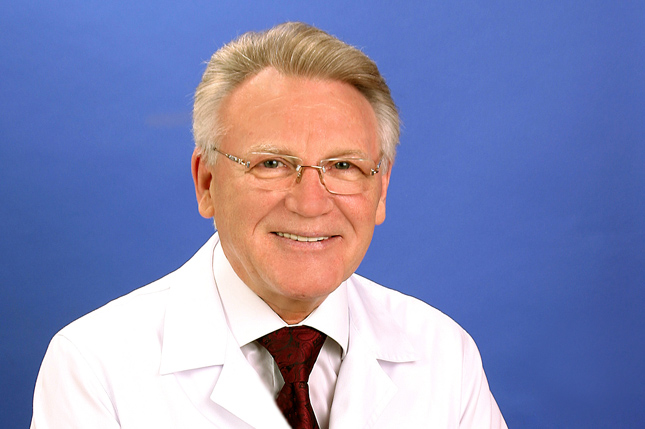
To remain capable and mobile for as long as possible, it is essential to understand the causes of back pain, the reasons for flare-ups, and possible treatment strategies. This is the focus of our conversation with Dr. Volodymyr Bersenev, Candidate of Medical Sciences, a top-tier neurologist, Honored Doctor of Ukraine, and founder of the “Bersenev Medical Center.” He is also the author of a unique method for treating back pain and numerous books on the subject.
Back pain is often associated solely with age-related changes, and this is a mistake. In reality, most problems begin at a young age and even in childhood, but people seek help from doctors only when it is already difficult to change anything. One in ten people experiences back pain, and 10 percent of them, unfortunately, become disabled without receiving timely treatment. The era of the internet and mobile communications, when the back and neck are often strained and held in uncomfortable positions, has brought about a sharp increase in back problems among younger people. Vladimir Bersenev spoke about all of this, as well as the metameric non-surgical treatment method.
Hippocrates said: “Whatever illness a person comes with, begin their treatment with the back, then see what remains, and heal them completely.” This is exactly how Vladimir Bersenev began his talk: “It is truly so: most human diseases are, in one way or another, connected to the spine. Even cardiologists say that today, out of every five patients who come to them, four need to see a neurologist. The same is true in gastroenterology. In recent years, we have also seen how closely gynecological diseases are linked to spinal issues. For the doctors at our clinic, the human spine is a target for treatment: whether we’re treating the spine itself or other diseases of the internal organs, the endocrine system, or vascular problems.
And the most common causes of back pain of varying intensity are currently disc protrusions and herniated discs
Time to see a neurologist
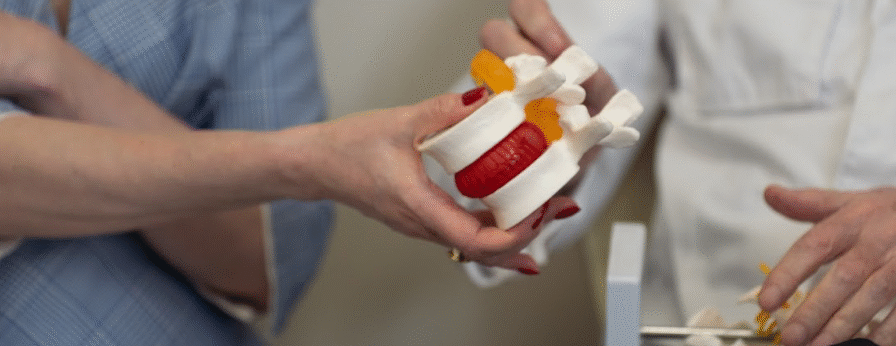
Back conditions often signal their presence through indirect symptoms, and people do not immediately understand the root cause of their problems. The most common cause of back pain is spinal osteochondrosis with impaired function of the intervertebral joints, a reduction in the height of the intervertebral discs, and, as a result, the development of protrusions and herniations in various locations with compression of the nerve roots.
Here are the main signs that your back requires the attention of a specialist, so don’t put off your visit, trying to numb the pain with painkillers:
• Spinal pain—ranging from a mild ache to severe episodes of pain;
• pain radiating into the limbs;
• a prickling sensation in the spine, arms, and legs;
• numbness in the limbs;
• weakness in the arms or legs;
• limited neck mobility;
• pain between the shoulder blades;
• intense pain in the lower back, limbs, chest, or neck;
• inability to bend over, sit down, lift a bag, or perform other physical activities due to severe pain;
• headache, dizziness;
• fluctuations in blood pressure
Why do disc protrusions and herniations occur?
- Genetic predisposition. This is linked to a deficiency of proteins that make up the disc. Always pay attention to the condition of your older relatives’ backs. And keep in mind that due to this factor, a herniation can even occur in a child. Therefore, never dismiss children who complain of back pain.
- Age-related changes. While we are young, our intervertebral discs are elastic and soft. But as we age, the tissue deteriorates, and the disc becomes stiff, almost like wood. It loses moisture and elasticity. Its shock-absorbing capabilities also decline, and the risk of disc injury increases significantly.
- Traumatic incidents. Who among us hasn’t fallen on ice at least once? Or stumbled, or bumped into something? Unfortunately, over time, all of this can lead to a disc protrusion or herniation. Blows to the spine and falls onto the buttocks are particularly dangerous. Lifting heavy objects abruptly also has a very negative effect on the discs.
- Physical inactivity, a sedentary lifestyle. Just imagine: a person who spends half their life in a chair has intervertebral discs that suffer more than those of someone who leads an active lifestyle. Our spine really doesn’t like prolonged sitting. Intervertebral discs lose their shock-absorbing properties and don’t receive enough moisture from the surrounding muscles if they remain in a static position for a long time.
- Excessive and careless movements during certain sports. For example, golf, hammer throw, and other throwing events place a heavy load on the discs.
- Excess weight. Extra pounds increase the load on the spine and contribute to more intense friction and wear of the discs.
- Smoking. This is not a direct cause, but rather a catalyst for these processes. Smoking reduces the amount of oxygen in the blood, which negatively affects the condition of the tissues.
Why are osteochondrosis and other back conditions affecting younger people?
The statistics are surprising: according to the latest data, back pain is the most common cause of illness worldwide, second only to the common cold. However, only 15–20% of all sufferers seek medical help.
Unfortunately, doctors often brush off a diagnosis of “osteochondrosis,” offering strange arguments—like “everyone has it” and “it’s age-related; there’s nothing you can do.” But this is fundamentally wrong, given how our lifestyle has changed over the past few decades! Consider, for example, how much time we spend sitting today? And in what position is our neck usually fixed when we’re holding gadgets? And how much excess weight has our planet collectively gained during the COVID-19 pandemic?
Here are just a few interesting figures to illustrate the point.
According to biomechanics, when lying down, intervertebral discs are subjected to 50 kg of pressure; when standing, 100 kg; when sitting with a straight back without support, 150 kg; and when sitting hunched over, 220 kg. Impressive, isn’t it?
Possible Treatment Approaches
Treatment for all conditions at our clinic is comprehensive. After thorough examinations and diagnostics, the doctor develops a personalized treatment plan, taking into account the many specific features not only of the patient’s spine but also of the body as a whole.
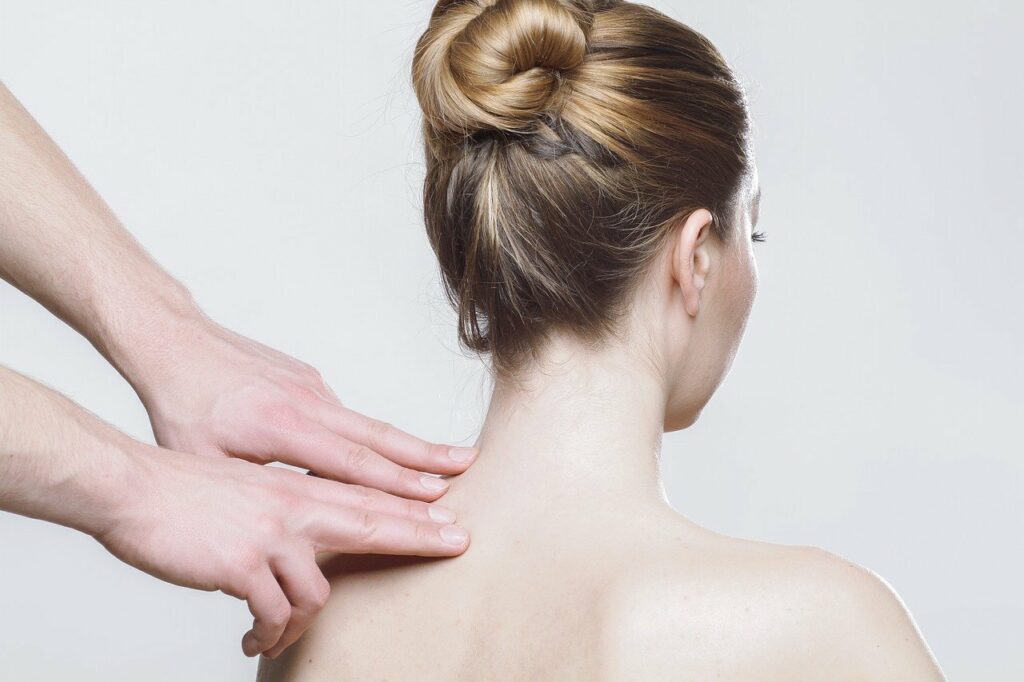
To reduce swelling and inflammation, therapeutic massage is prescribed, and physical therapy procedures are performed. To restore function, the patient may be prescribed exercises on fitness equipment. Don’t be skeptical about physical therapy—it helps strengthen the back’s muscle corset and restore muscle tone. Medication is used to eliminate pain, relieve tension, and neutralize the inflammatory process.
However, metameric treatment methods have proven to be the most effective. This is a rather complex, combined method that integrates classical therapy with Eastern techniques. It is entirely based on human physiology.
All human structures are formed metamerically from birth. The three germ layers—the ectoderm, mesoderm, and endoderm—form 33 metameres (“metos” from the Greek, meaning “part”) on each side of our body. Each of the 33 metameres consists of seven components derived from the three germ layers. One of the most well-known metameres is located in the head—the trigeminal nerve.
To put it simply, a metamer is a kind of matrix from which all human tissues and organs originate. And Dr. Bersenev’s metameric method involves specifically stimulating these matrices.




 by bus No. 7 (on weekdays)
  by bus No. 181
  by trolleybus No. 6, 16, 18